Notes from a Caribbean Return
By Kris Bahar · January 2026
INTRODUCTION — RETURN TO THE CARIBBEAN
January 2026 wasn't a "go somewhere new" kind of month for me. It was a go back month.
We took a cruise with my family — the kind of trip that comes with slow mornings, overfull buffet plates, and a lot of small, repeated decisions about where to stand so everyone fits in the photo. I was happy to be there in the way you're happy when time briefly behaves: when everyone's together, and nobody's in a rush, and the days feel long enough to notice.
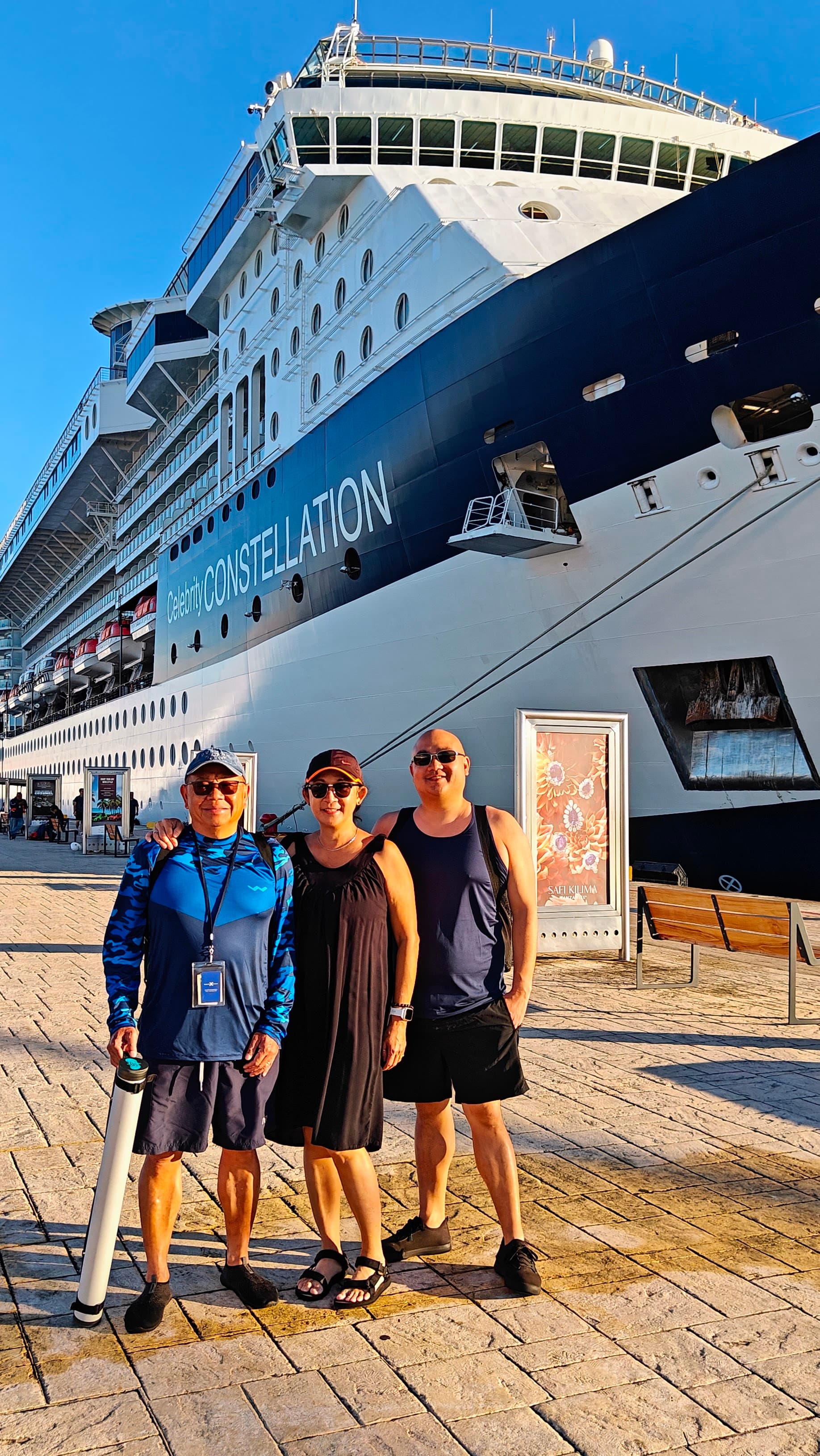
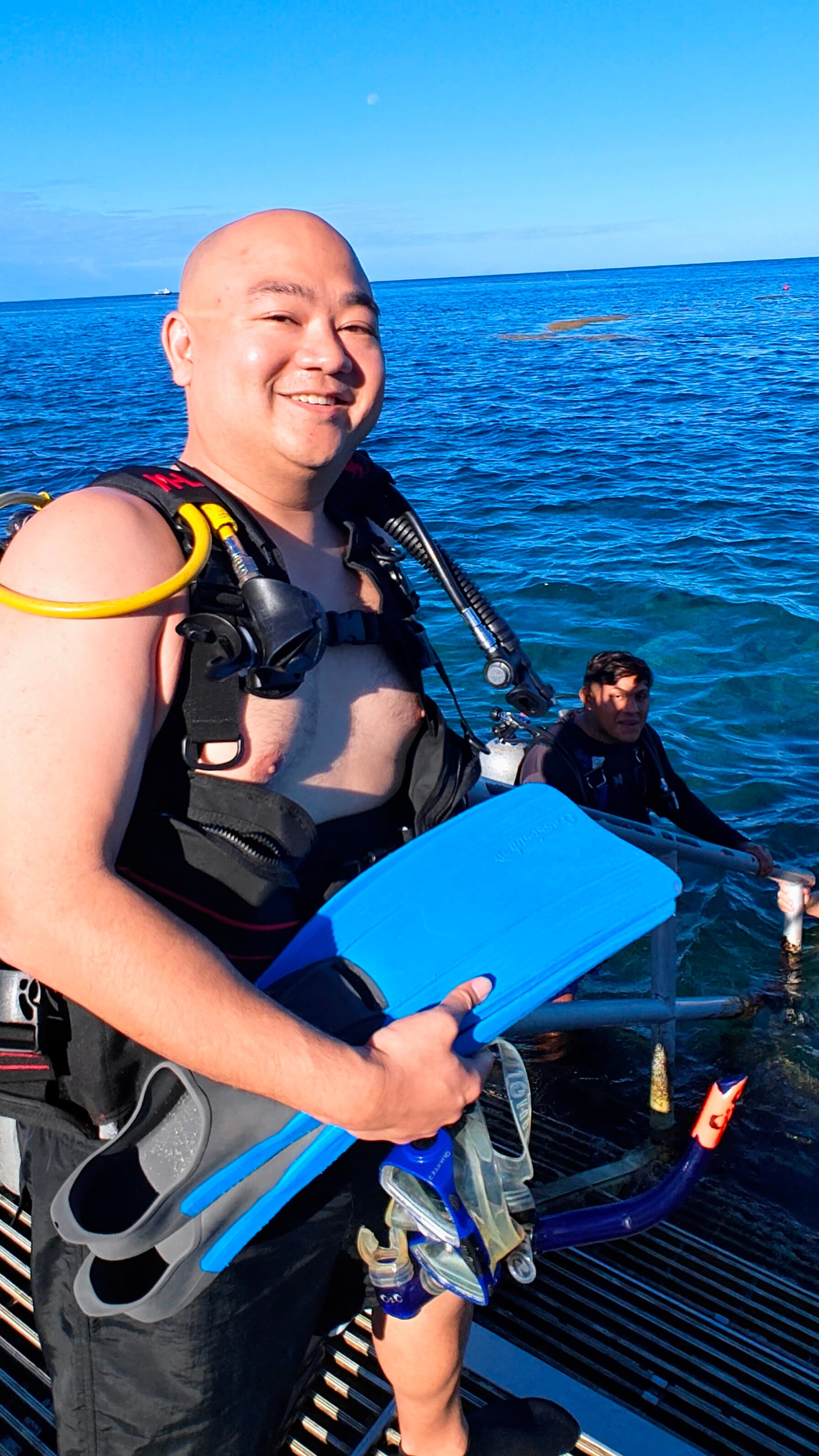
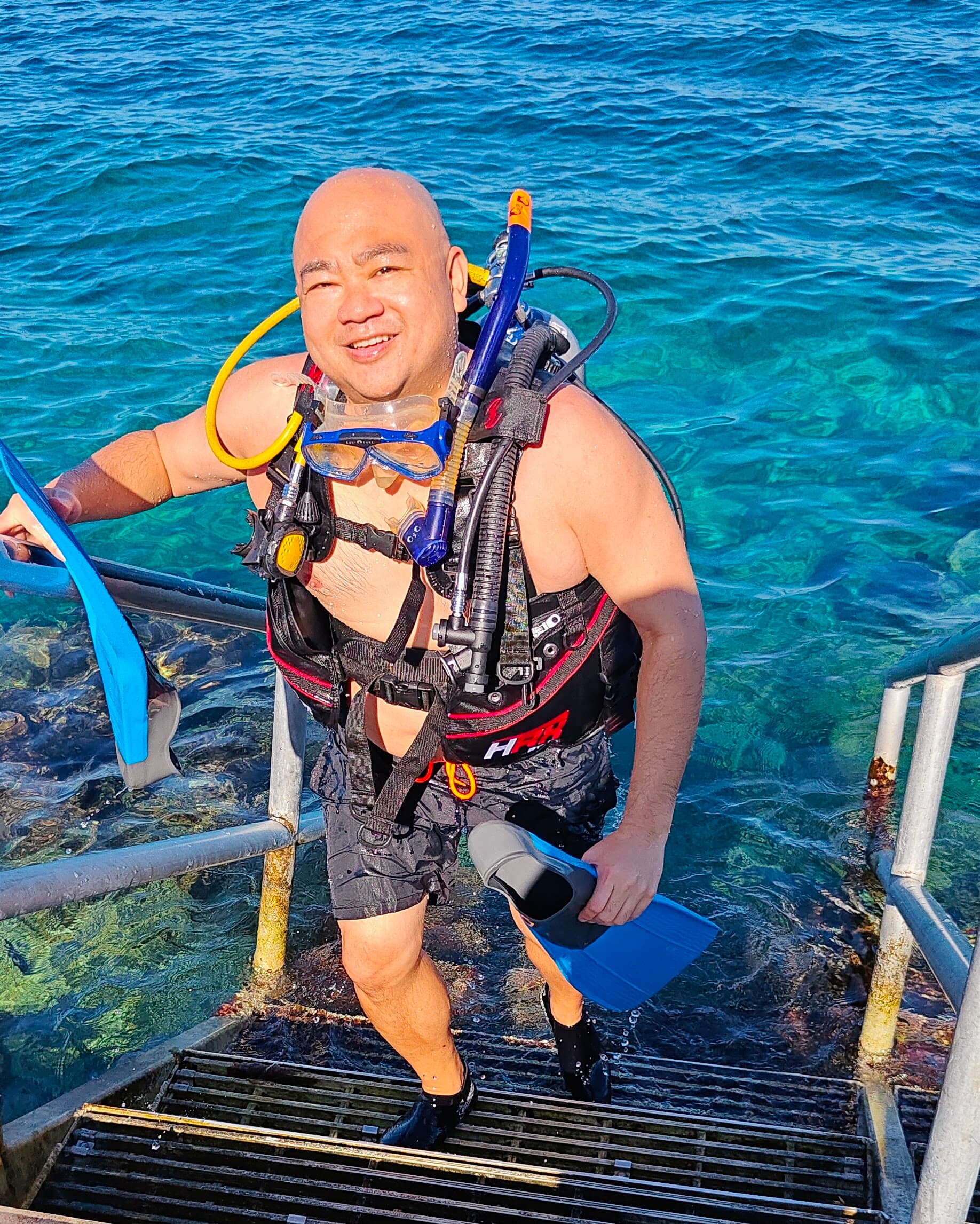
In Cozumel, we went to Chankanaab State Park for a dive/snorkel day — one of those names that has lived in the background of Caribbean vacation lore for decades. I'd been in clear water before, but I hadn't been in this water in a while: the kind that makes distance feel dishonest. The surface looked like a polished lens; below it, the world snapped into high definition.
Under a mask, sensory information arrives with different priorities. Sound compresses into your own breathing. Light stretches and flickers, as if it's being poured through moving glass. The water felt warm in a way that wasn't luxurious so much as permissive — warm enough that you can stop thinking about your skin and start thinking about the scene.
The reef itself didn't announce anything dramatic. It was there — textured, uneven, alive. But the first thing I noticed wasn't a specific fish or coral. It was the clarity: the way sunlight reached down without losing confidence. Then color: blues that had names only in paint stores, and oranges that only exist when the sun is filtered through water. I took photos the way I always do when I'm trying to make memory behave: not because the photo is better than the moment, but because I want to be able to look back and ask, Was it really like that?
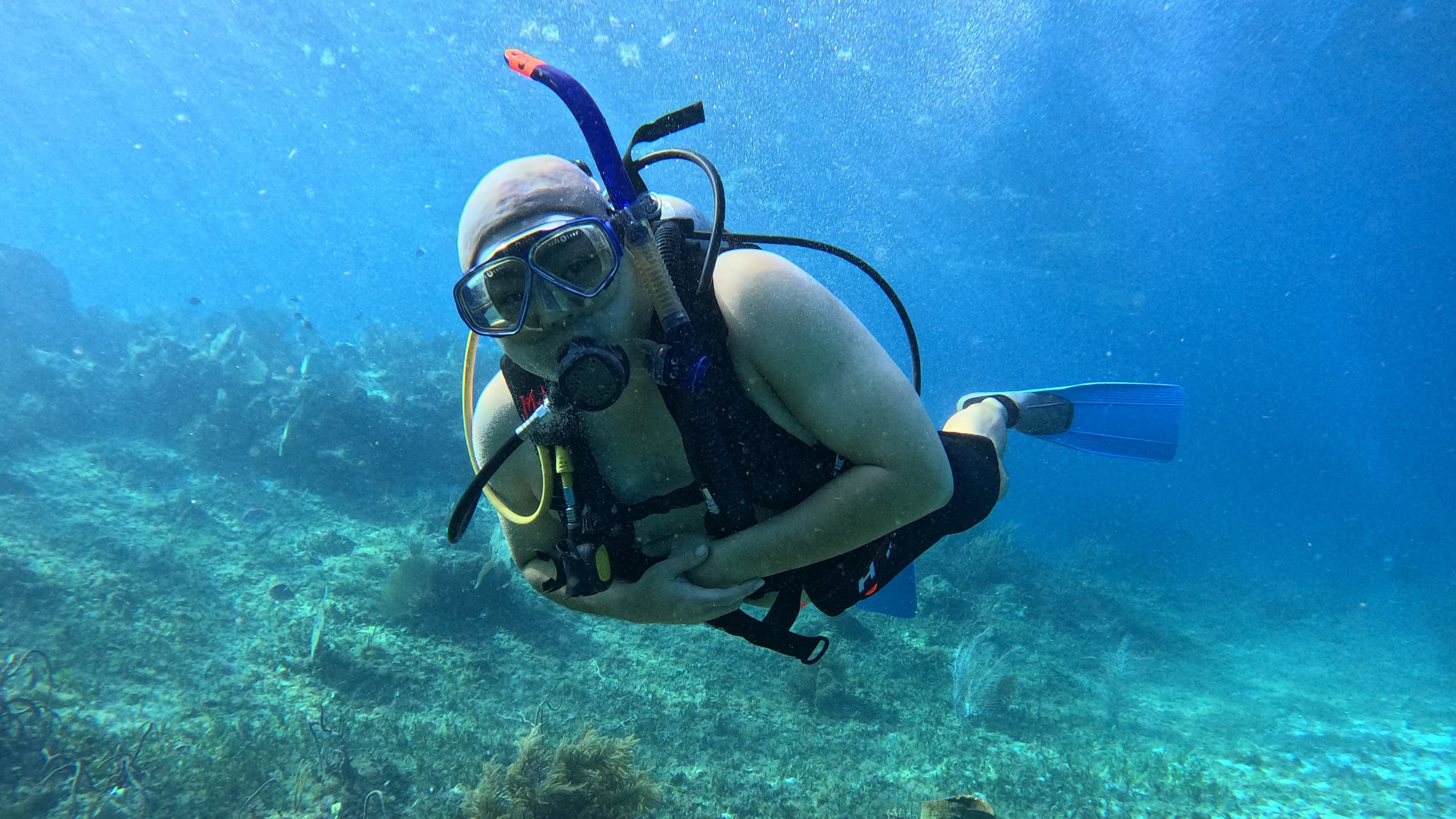
Field note (for my future self): when the water is this clear, it's easy to overestimate how "healthy" everything is. Visibility is a seductive metric.
CHILDHOOD CONTEXT — THE CARIBBEAN I REMEMBER
I was born and raised in North Carolina. The ocean I grew up with was the Atlantic in its more temperamental moods: gray-green water, sand that sticks to everything, weather that changes its mind. My earliest Caribbean trips felt like an alternate physics engine — the same planet, but rendered with a brighter palette.
As a kid, I remember reefs as something that popped. Not in a romantic, postcard way — more like the way a new video game looks when you switch from standard definition to HD and your eyes don't quite trust what they're seeing. Fish weren't "species"; they were moving punctuation. Coral wasn't "habitat"; it was structure and color and motion, a city for small things.
I remember sunlight in particular: how it broke into shifting tiles across sand and rock; how it made everything look closer than it was. And I remember the feeling of learning, without realizing I was learning, that the ocean is not empty. It's crowded — just not in a way that aligns with human intuition.
There's a funny thing about how children store nature. You don't say "ecosystem." You say, "Look at that." You remember patterns: schools of fish as living weather; the way a reef has corners; the way a single bright creature can turn a whole scene into a story.
Now, with an engineer's habit of asking what's behind the curtain, I can't unsee structure. But the childhood memory still matters because it's not a dataset — it's a baseline. It's what my brain still expects when someone says "Caribbean water."
Field note: nostalgia is a sensor. It isn't always accurate, but it's sensitive to change.
REALITY CHECK — REEFS THEN VS NOW
When I got back in the water in 2026, I couldn't avoid doing the comparison — not in a dramatic way, just in the quiet way your eyes do math without telling you.
Some of what I saw was familiar. There were still fish. There were still moments of color, still pockets of complexity, still that sense of depth and layered life that makes reefs feel like more than scenery.
But the reef didn't have the same visual density I remember from childhood. In places, coral looked less vivid, like a photo with saturation dialed down. There were fewer "wow" clusters — fewer bursts of color that force your attention to stop wandering. I noticed more algae than I expected, more of the soft green-brown textures that read as "something is filling the space."
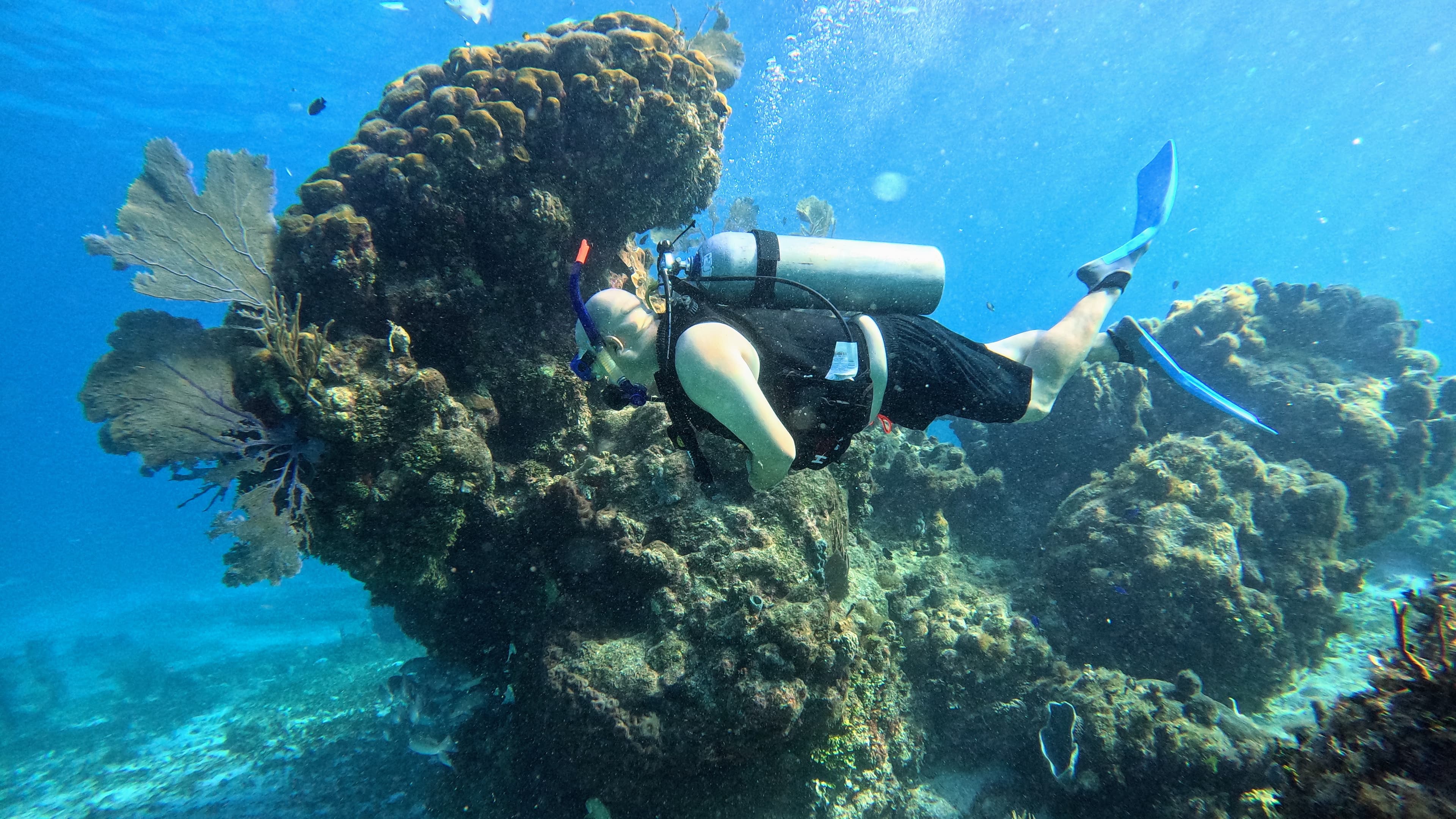
I'm careful with conclusions here because reefs don't change uniformly, and neither do our perceptions. Reefs are patchy even in healthy times. Some areas bounce back. Others don't. A single dive is not a longitudinal study.
Still, the broad context is not mysterious:
- Bleaching episodes can leave coral alive but stressed, or dead but still present as pale skeleton.
- Warming shifts the odds against recovery.
- Hurricanes can physically rearrange reef structure.
- Overfishing changes food webs in ways that show up as "why is there so much of that now?"
If you want a simple, high-level refresher on the basics of how reefs function (and why they're sensitive), this NatGeo explainer is a good starting point:
I don't leave a reef dive thinking, "It's over." That's not accurate, and it's not useful. What I do leave thinking is something more granular and harder: It's different. It's uneven. And the direction of change isn't random.
Field note: grief shows up as a comparison operation. Curiosity decides what to do with it.
THE IMPULSE TO ACT — ENTER LIONBOT (FIRST CONCEPT)
When you're engineering-minded, noticing change tends to trigger a reflex: What could I build that helps?
One of the obvious candidates in the Caribbean is lionfish — a striking fish that doesn't belong here, introduced and now invasive across much of the region. They're effective predators, and they can pressure reef fish populations in a way that ripples outward. The ecological story is complicated, but the summary is not: lionfish removal is generally considered a net positive for reef ecosystems.
Years ago, I played with an early concept I half-jokingly called LionBot: an autonomous robot designed to help remove invasive lionfish.
In my head, it looked something like this:
- solar charging (surface or dock)
- computer vision to identify lionfish
- repeated dive cycles (go down, do work, return)
- connectivity for monitoring and updates
And then, immediately, the engineer in me starts listing the hard parts:
- underwater perception is hard; water is messy; lighting changes constantly
- safety and permitting are real (robots and swimmers don't mix casually)
- retrieval, maintenance, and failure modes matter more than the "happy path"
- economics dominate: how many units, how often, how much value per deployment?
So: I'm not building this right now. I'm interested in exploring it, not declaring it solved. But the concept matters because it's the kind of idea that shows up when you stand near a reef and feel the friction between what you remember and what you see.
Field note: "autonomous" is the word we reach for when we're trying to outrun labor constraints. Nature does not care about our labor constraints.
TRIP SURPRISE — THE JELLYFISH BLOOM
Then the trip gave me a surprise I wasn't expecting to write about at all: a jellyfish bloom.
It wasn't a single "oh look, a jellyfish" moment. It was a condition — a texture of the water. Jellyfish were present enough that you had to make decisions differently: where you put your hands, how you kicked, whether you stayed in.
What struck me most wasn't my own reaction. It was watching tourists — snorkelers, swimmers, families — negotiate uncertainty. You could see the moment when a casual swim becomes a risk calculation. Some people pushed through. Some people climbed out fast. Guides did what guides always do: they translated the ocean into something humans can handle, with a mix of reassurance and boundary-setting.
And it felt, in a small but real way, out of sync with the childhood Caribbean in my head. When I was young, the ocean was full of creatures, yes — but jellyfish weren't part of my stored highlight reel.
Ecologically, blooms can be driven by a mix of factors: temperature, nutrient dynamics, predator/prey imbalances, changing currents. They can also be episodic and normal. I'm not claiming "jellyfish = apocalypse."
But I do think blooms are often a symptom — not of one thing, but of an ecosystem that's being nudged out of familiar equilibrium.
Also important: jellyfish here are native, not invasive. They're not villains. They're just very good at being jellyfish.
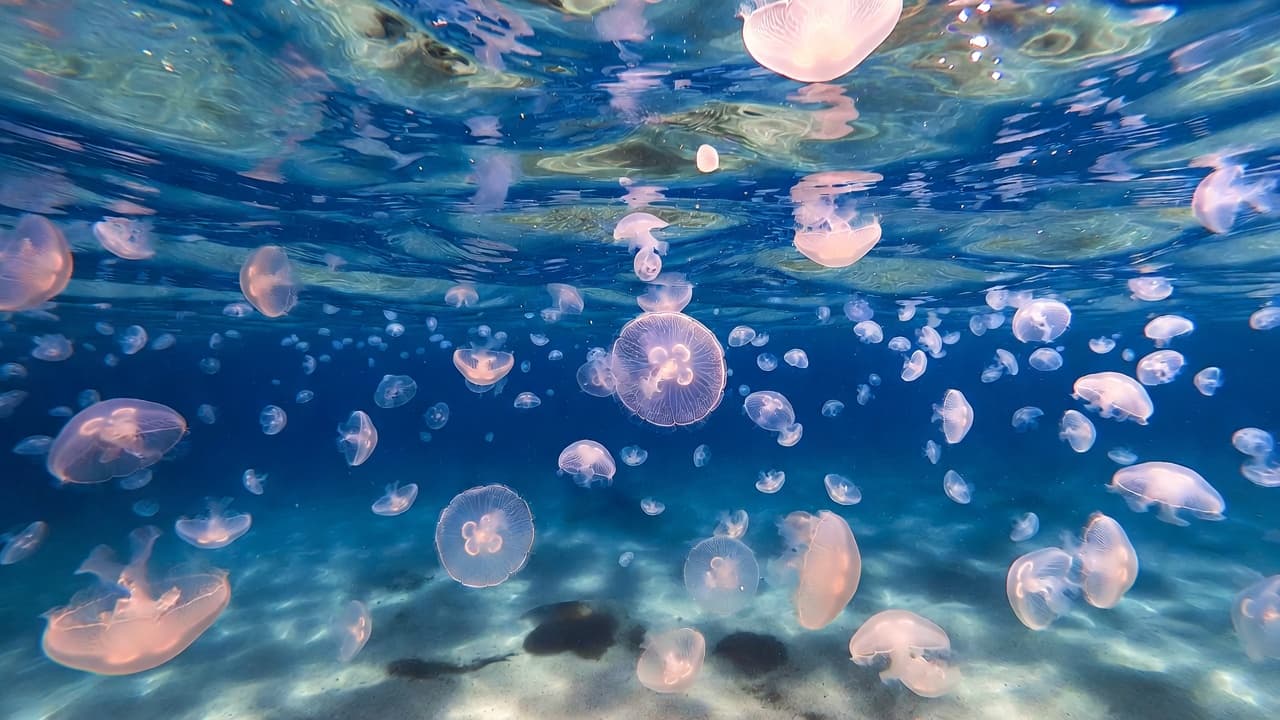
Field note: the ocean doesn't offer "problems," it offers conditions. Humans decide which conditions count as problems.
INSIGHT — A MORE PRACTICAL PHASE 1
If I'm honest, the jellyfish moment did something useful to my thinking: it forced a question that pure reef grief doesn't always force.
What problem can an early robotics platform solve that people actually feel?
Lionfish removal has ecological value, but it's also deep-water, perception-heavy, regulation-heavy, and hard to operationalize at scale. It's not where you start if you want to build something real, test it safely, and learn quickly.
Jellyfish management in recreational swim zones — in contrast — has a set of properties that feel like a realistic "Phase 1":
- It improves usability. People can use the water without constant hesitation.
- It reduces stings and closures. Less disruption for operators and visitors.
- It's surface-accessible. A lot of the work can happen near the surface.
- It's testable. Shallow, controlled settings; clear success metrics; iterative deployment.
This is not "saving the reefs." It's not even conservation, really. It's closer to what service robotics does best: operate in messy environments, reduce friction, and create reliability where humans currently rely on labor and luck.
And I want to be explicit about intent: I'm interested in working on this kind of system, not announcing one.
Field note: a modest, real system beats a grand, imaginary one.
MARKET FRAMING — WHO CARES ENOUGH TO PAY?
The moment you say "robot," you're not only in engineering-land. You're in economics-land. A system that can't be sustained doesn't get to mature into its more ambitious phases.
So who cares enough to pay for jellyfish mitigation in the places people swim?
Potential stakeholders include:
- Resorts (guest experience, safety, refunds, reputation)
- Cruise lines (shore excursion quality, predictable operations)
- Beach municipalities (public safety, tourism health, operating costs)
- Dive operators (customer confidence, fewer cancellations)
- Marinas (water access, comfort, liability)
None of these groups are waiting for a robot specifically. They're already using analog interventions when conditions get bad:
- nets and barriers
- temporary closures
- manual cleanup crews
- warning flags and rerouting
- (in other contexts) sargassum booms and collection
The interesting framing isn't "a robot is cool." It's: a paid Phase 1 creates financial viability for a platform that might later tackle deeper ecological work.
Again: not a pitch. Just a landscape sketch of who feels the pain first, and who might fund learning.
Field note: markets are where problems become repeatable enough to sustain iteration.
ENVIRONMENTAL ETHICS SIDEBAR
It matters how we talk about interventions like this, because it's easy to slip into techno-savior language without noticing.
Jellyfish removal is not conservation.
It's a service intervention — a choice to prioritize human recreation in a specific zone.
That doesn't make it evil. But it does mean we should be honest about what it is: a tool for human access, not an ecological cure.
Lionfish removal is different.
When you remove an invasive species that's actively damaging a region's food web, you're closer to an ecological positive — more like repair than rearrangement.
And that contrast matters: native nuisance vs invasive damage are not the same category.
My goal in thinking about ocean robotics isn't to declare myself a hero, or to pretend a machine can "fix the ocean." It's to stay inside a smaller, more responsible stance:
- be curious
- be humble about complexity
- build things that can be tested safely
- learn in public without exaggerating outcomes
Field note: ethics isn't a paragraph you add at the end; it's a constraint you carry through design.
FUTURE ROADMAP (SPECULATIVE)
If I imagine a robotics platform evolving over time — and I want to emphasize that this is speculative — I can see a phased path that starts with human-facing utility and potentially grows toward ecological utility.
One possible sequence:
-
Jellyfish clearing (surface, service robotics)
What's hard: detection in glare, collection without making "jellyfish soup," operating safely around swimmers. -
Sargassum interaction (tourism + municipal)
What's hard: scale, logistics, disposal, variability across seasons and coastlines. -
Lionfish removal (ecological + fishery benefit)
What's hard: underwater perception, collection/dispatch constraints, safety, permitting, reliability at depth. -
Coral monitoring (data + science)
What's hard: consistent imaging, repeatable transects, calibration, avoiding biased sampling. -
Reef restoration assistance (ecological impact)
What's hard: delicate manipulation underwater, long feedback loops, high uncertainty, collaboration with conservation orgs.
This roadmap isn't a promise. It's a way to organize curiosity into steps that don't require magical thinking.
Field note: the ocean rewards patience; engineering rewards iteration. The overlap is where progress lives.
CONCLUSION — A MODEST START
I don't think small interventions "save" ecosystems. But I do think small interventions can matter indirectly.
Sometimes they matter because they keep people connected to the ocean — because connection is a prerequisite for stewardship. Sometimes they matter because they create funding pathways for work that otherwise stays theoretical. Sometimes they matter because they turn a vague grief into something you can test, measure, and improve.
For me, this January return to the Caribbean reminded me that nostalgia isn't only longing. It can also be a kind of motivation — a way of saying, "This mattered to me once, and it still does."
I'm not certain about solutions. I'm not even certain about which problems deserve priority.
But I am certain about this: the way humans engage with oceans is going to keep changing, whether we like it or not. The question is whether we meet that change with avoidance, denial, or responsible curiosity.
So I'll end with an open question I'm still carrying:
What would it look like to build tools that keep ocean access meaningful — without pretending we control the ocean itself?
References / notes
- NatGeo "Coral Reefs 101" (embed source):
https://www.youtube.com/watch?v=A8HUYNC6P2s - xAI output usage context (for the AI-generated jellyfish illustration):
https://x.ai/legal/terms-of-service/previous-2025-06-09