Shenzhen Observations: What the West Gets Wrong About China
An opinion by Kris Bahar · April 2026
INTRODUCTION - A CITY THAT CRYSTALLIZED SOMETHING
This wasn't my first time in China.
I was in Beijing around the time of the 2008 Olympics - young enough that I wasn't processing it through any particular geopolitical lens, but old enough to absorb the feeling of it. Massive city. Dense, alive, unmistakably its own thing. It planted something in me: a sense that China was operating at a scale and with an energy that didn't match the diminished version of it I'd encounter back home in conversation.
Since then, I've been back a handful of times for work - supplier visits, mostly. Quick and transactional. You fly in, you meet people, you fly out. You don't really get to feel a city that way.
This trip to Shenzhen was different. I came in with a framework I'd been building for years: that China has been growing, seriously and systematically, and that the gap between that reality and the story told about it in the West has been widening. I wanted to see it with clear eyes. What I found didn't just confirm the framework - it sharpened it.
Shenzhen is a modern city. Genuinely, impressively modern - clean streets, gleaming infrastructure, a skyline that makes most American cities look like they stopped trying twenty years ago. I walked around at 11pm without a single concern for my safety. No visible homelessness. No trash-strewn corners, no sense of disorder. Whatever the full picture is - and I'm aware I didn't see every corner of the city - the experience left a mark.
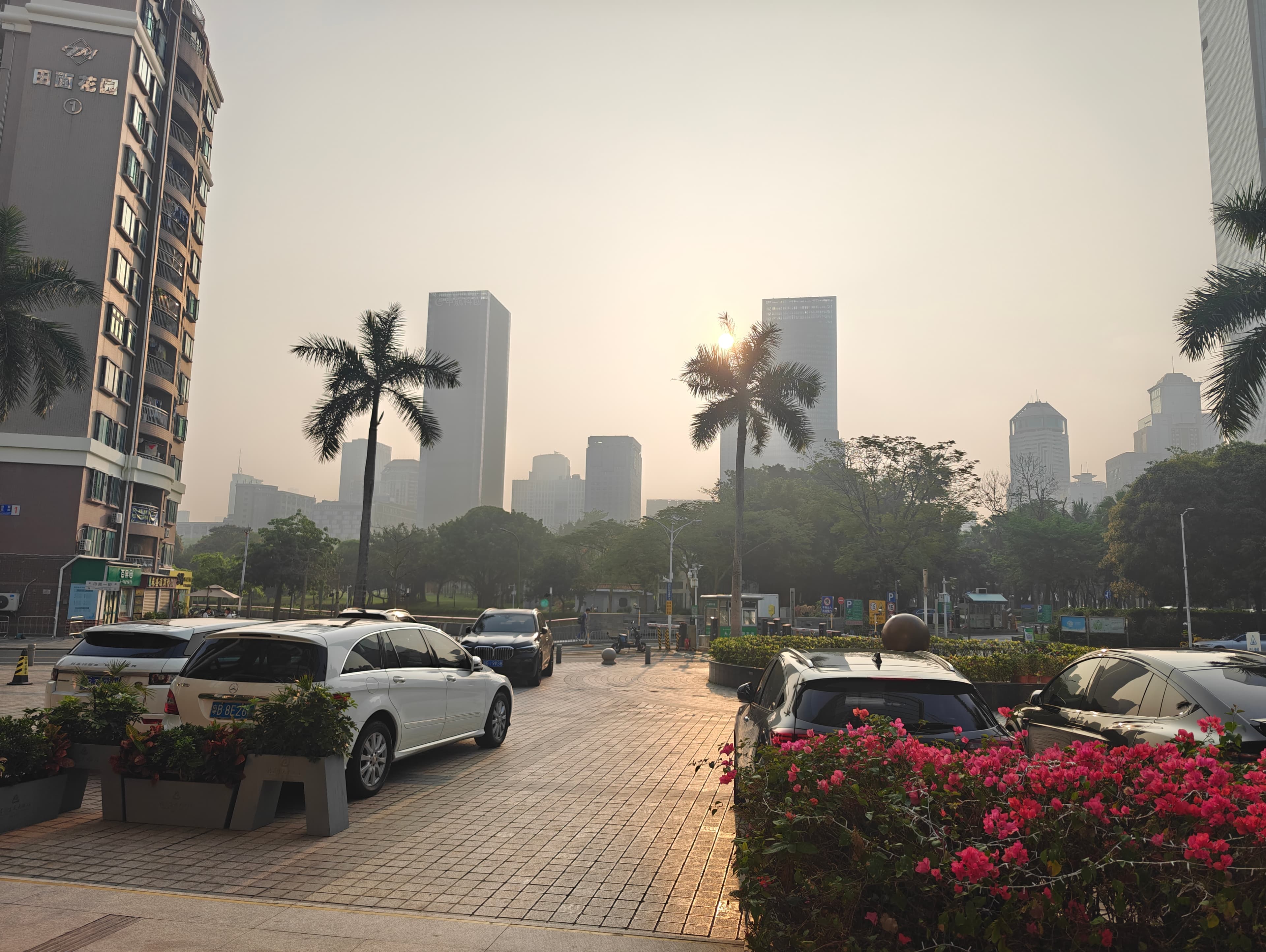
This article is my attempt to think out loud about what I saw, what it means for the US-China relationship, and why I think the narrative we've been fed about China as adversary is doing us real harm.
Opinion disclaimer: this is exactly that - my opinion, based on multiple trips over nearly two decades and a career spent paying attention to manufacturing and technology.
THE FACTORIES - SCALE CHANGES EVERYTHING
I visited a number of factories during my time in Shenzhen - packaging, metal injection molding, PCB assembly, and more. And whatever preconceptions I had about what "Chinese manufacturing" looks like, the factories I walked through quietly dismantled them.
The word I keep coming back to is scale. Not just big, but systematically, deliberately, comprehensively big. Production lines optimized over decades. Automation that has quietly replaced human hands in places you wouldn't expect. A single operator managing multiple machines with a calm efficiency that only comes from years of refinement.
This isn't a sweatshop story. The automation advancements I witnessed were genuinely impressive - minimal headcounts running high-output operations. The equipment wasn't just present; it was working, integrated, and tuned.
I left those factory floors with one strong, uncomfortable thought: this took a long time to build, and starting from scratch would be extraordinarily hard.
Field note: infrastructure isn't just physical - it's institutional, cultural, and generational. You can't Amazon Prime your way to a manufacturing ecosystem.
THE RESHORING ILLUSION
There's a popular political idea right now that the US can and should bring manufacturing home. I understand the impulse. Supply chain fragility is real. Geopolitical dependency is a legitimate concern. Jobs and industrial capacity matter.
But I think we're dramatically underestimating what "reshoring" actually requires.
The factories I saw in Shenzhen weren't built overnight. They represent decades of investment, iteration, and skill accumulation - in equipment, in workforce knowledge, in supplier networks, in the physical infrastructure that surrounds them. You don't rebuild that in a tariff cycle.
Consider what Elon Musk is attempting with Tesla and their robotics programs as a useful parallel. The investment is staggering. The timelines are long. And that's with essentially unlimited capital, public attention, and the singular drive of one of the most resourced companies in the world - applied to one product category.
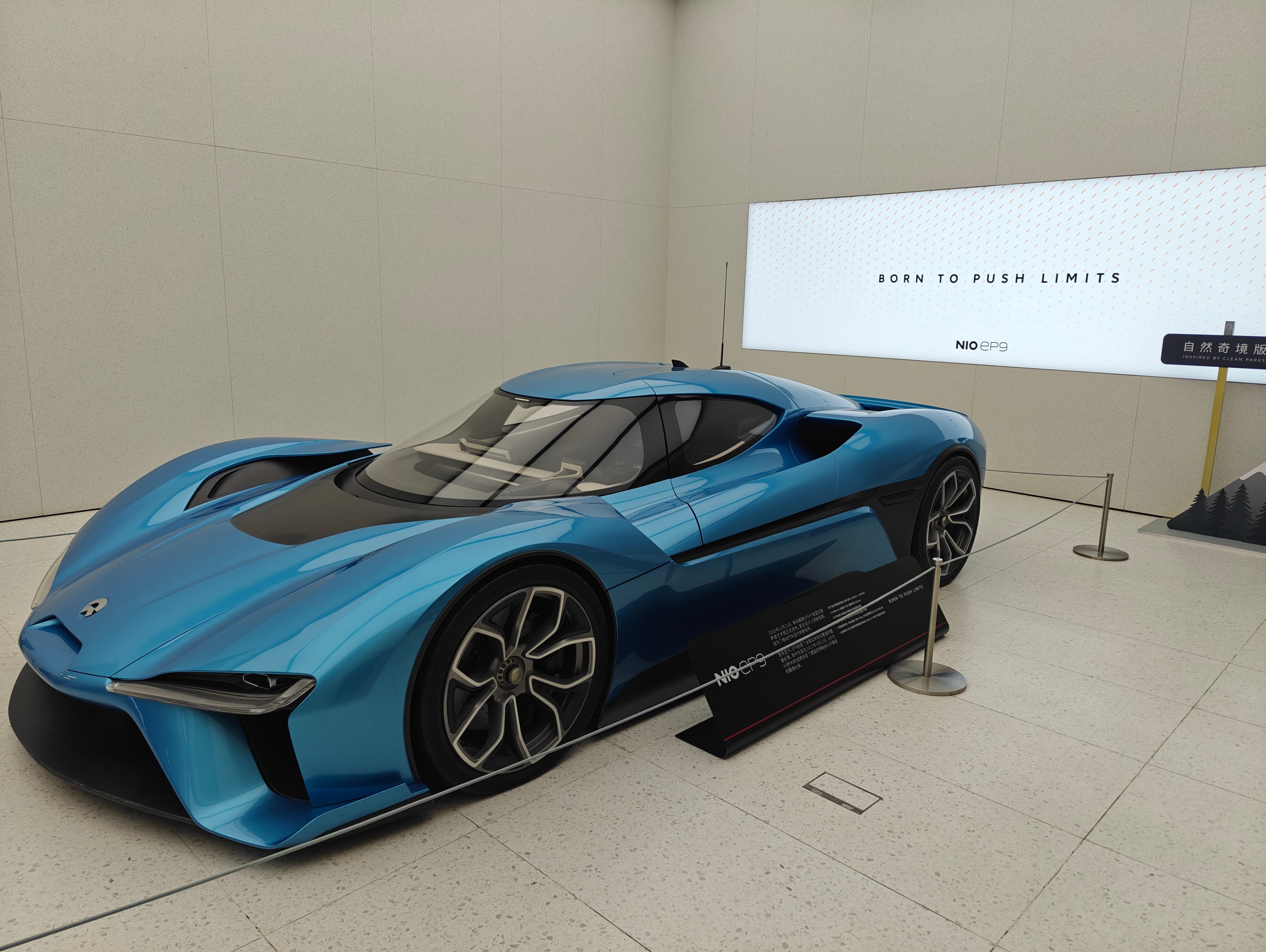
Now ask: how do you replicate that across packaging, electronics, precision metalwork, textiles, and a hundred other industries, simultaneously, in a country where labor costs are dramatically higher, where the vocational training pipeline has atrophied, and where the cultural muscle memory for factory-floor craftsmanship has largely been lost?
I'm not saying it's impossible. I'm saying we should be honest about what it costs, how long it takes, and what we'd have to sacrifice elsewhere to get there.
Field note: the US is exceptional at many things. Rebuilding a manufacturing base we voluntarily offshored over forty years is not a fast project.
HUAQIANGBEI - A WORLD WITHOUT A US EQUIVALENT
One afternoon I made my way to Huaqiangbei, Shenzhen's famous electronics district - floor after floor of components, modules, displays, sensors, development boards, and hardware you didn't know you needed until you saw it stacked floor-to-ceiling in a stall the size of a walk-in closet.
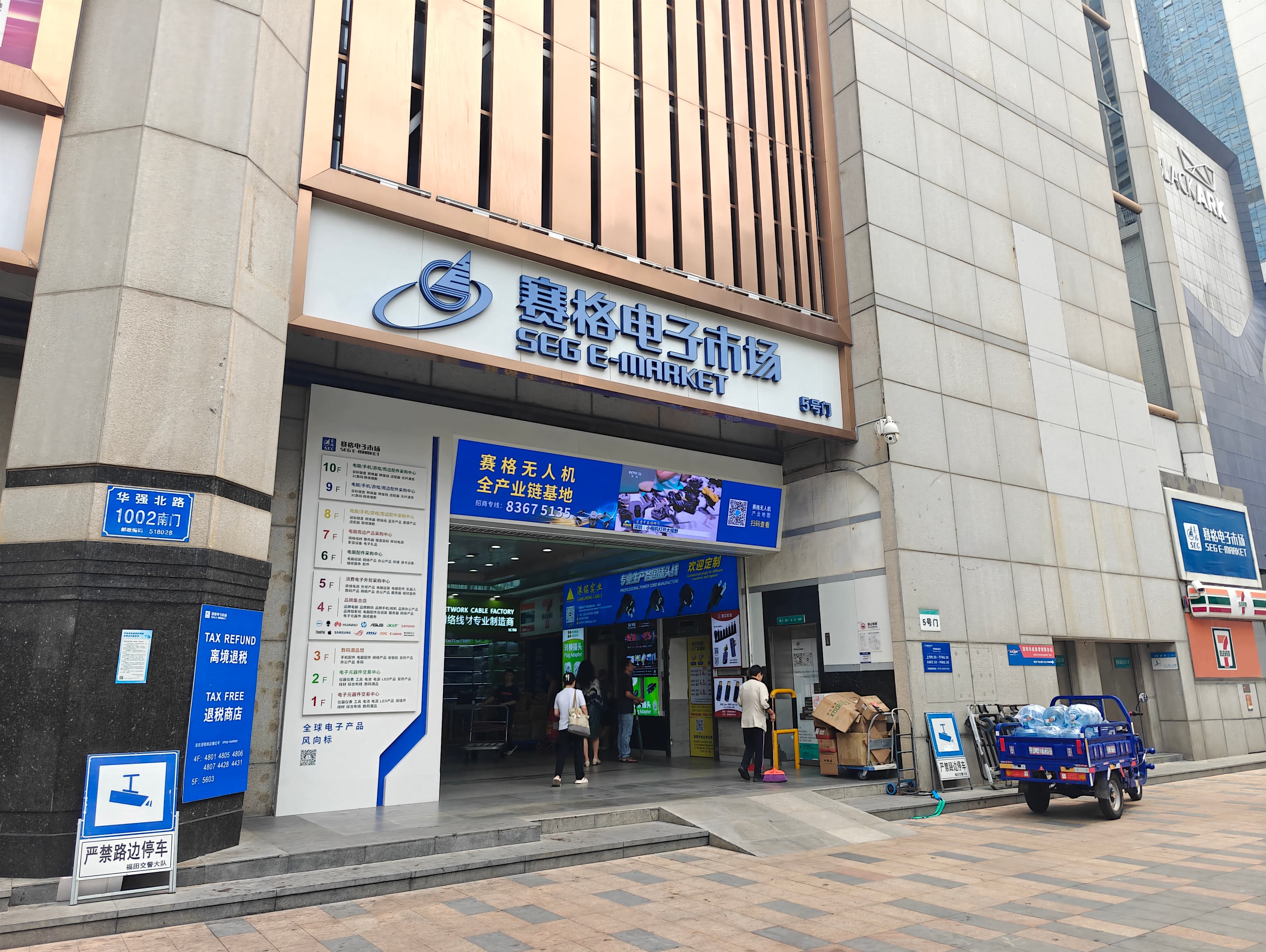
There is nothing like this in the United States. Nothing even close.
It was overwhelming in the best possible way. As a hardware-oriented engineer, walking those floors felt like being let into a library where every book is a part you can actually buy, today, in quantity, at prices that make your head spin. Want to prototype something? You can source nearly every component you need within a few city blocks.
The contrast with the US experience - where hardware procurement means lead times, minimum order quantities, and distributor markups - was jarring. This isn't a curiosity. It's a structural advantage for anyone building physical products.
Field note: the ecosystem around manufacturing matters as much as the manufacturing itself. Huaqiangbei isn't a market - it's an argument.
DESIGN HERE, MAKE THERE - AND WHY THAT'S NOT WEAKNESS
Here's a framing I actually believe in: the US-China manufacturing relationship, done right, is a feature, not a bug.
American strengths in design, software, brand, and systems thinking pair naturally with Chinese strengths in manufacturing execution, scale, and supply chain density. The iPhone isn't a symbol of American decline - it's a symbol of what intelligent global collaboration looks like. Designed in California. Assembled in China. Owned by the world.
The question isn't whether to participate in that system. The question is whether we do it smartly - protecting IP, maintaining leverage, building strategic redundancy where genuinely necessary - while also being honest that blanket decoupling is expensive, disruptive, and probably not achievable at the pace or scale that current rhetoric implies.
I came away from Shenzhen more convinced than ever that the design-in-US, make-in-China model is a strength to lean into - not with naivety, but with clear eyes and a strategy.
THE LANGUAGE GAP - AND WHAT IT SAYS ABOUT US
One thing that caught me off guard: English is essentially absent in day-to-day Shenzhen life. Not "limited" - absent. Without translation apps on my phone, or a bilingual local nearby, basic interactions became genuinely difficult.
I found myself wanting to learn Mandarin. Not in a vague, someday-maybe way - in an immediate, practical, I-need-this-right-now way.
The flip side of this is worth noting: in China, English is not assumed. In the US, we largely expect the world to come to us linguistically. That asymmetry says something. It says something about who's putting in the work to understand the other side.
On the practical end: not all venues accepted international credit cards. Digital payments are ubiquitous in China - WeChat Pay and Alipay are everywhere - but they're not set up for foreign visitors by default. It's a friction worth being prepared for.
The food, on the other hand, needed no translation. I ate broadly and well - quality across the board was high, variety was real, and I'd happily return for the meals alone.
THE POLITICS - AN HONEST TAKE
I want to be direct about something: I think a meaningful portion of what Americans "know" about China is propaganda - not necessarily deliberate, but structurally produced by a media environment that finds adversarial framings more compelling than nuanced ones, and by political actors who benefit from having a foreign boogeyman.
That doesn't mean China has no problems. Authoritarianism is real. Human rights concerns are real. Competitive pressures are real. I'm not dismissing any of that.
But the strategic and economic relationship between the US and China is too important, too intertwined, and too consequential to be governed by fear narratives. And when I look at who actually benefits from sustained US-China tension, I don't see "the American people" at the top of that list. I see defense contractors, certain domestic industries seeking protection from competition, and political figures who find the narrative useful.
Ordinary people - workers, engineers, entrepreneurs, consumers - generally benefit from cooperation, trade, and stability. The people who benefit from conflict are rarely the ones doing the actual work.
My take: the US should be engaging more with China, not less. Learning the language. Building the relationships. Finding the common ground. Competing where we compete, collaborating where we can.
Walking around Shenzhen at 11pm, completely at ease, I didn't feel like I was in enemy territory. I felt like I was in a city built by people who are very good at building things, and who might be open to knowing us better if we'd stop treating them like a threat.
CONCLUSION - WHAT I BROUGHT HOME
A trip like this doesn't give you answers. It gives you better questions.
I came home thinking harder about what American manufacturing actually requires to be revived - not as a slogan, but as an engineering problem. I came home thinking about the language gap, and what it costs us not to close it. I came home with a clearer sense that the design-make collaboration with China is worth protecting and improving, not dismantling in a panic.
And I came home with a simple, stubborn observation that I can't quite shake:
A city I was vaguely afraid to visit turned out to be one of the cleanest, safest, most impressive places I've been. That gap - between the version of China I carried in my head and the one I walked through - is worth taking seriously.
We can do better than fear. We're usually better when we do.